
 by
Timothy White.
This text may be archived and redistributed both in electronic
form and in hard copy, provided that the author and journal are
properly cited and no fee is charged for access.
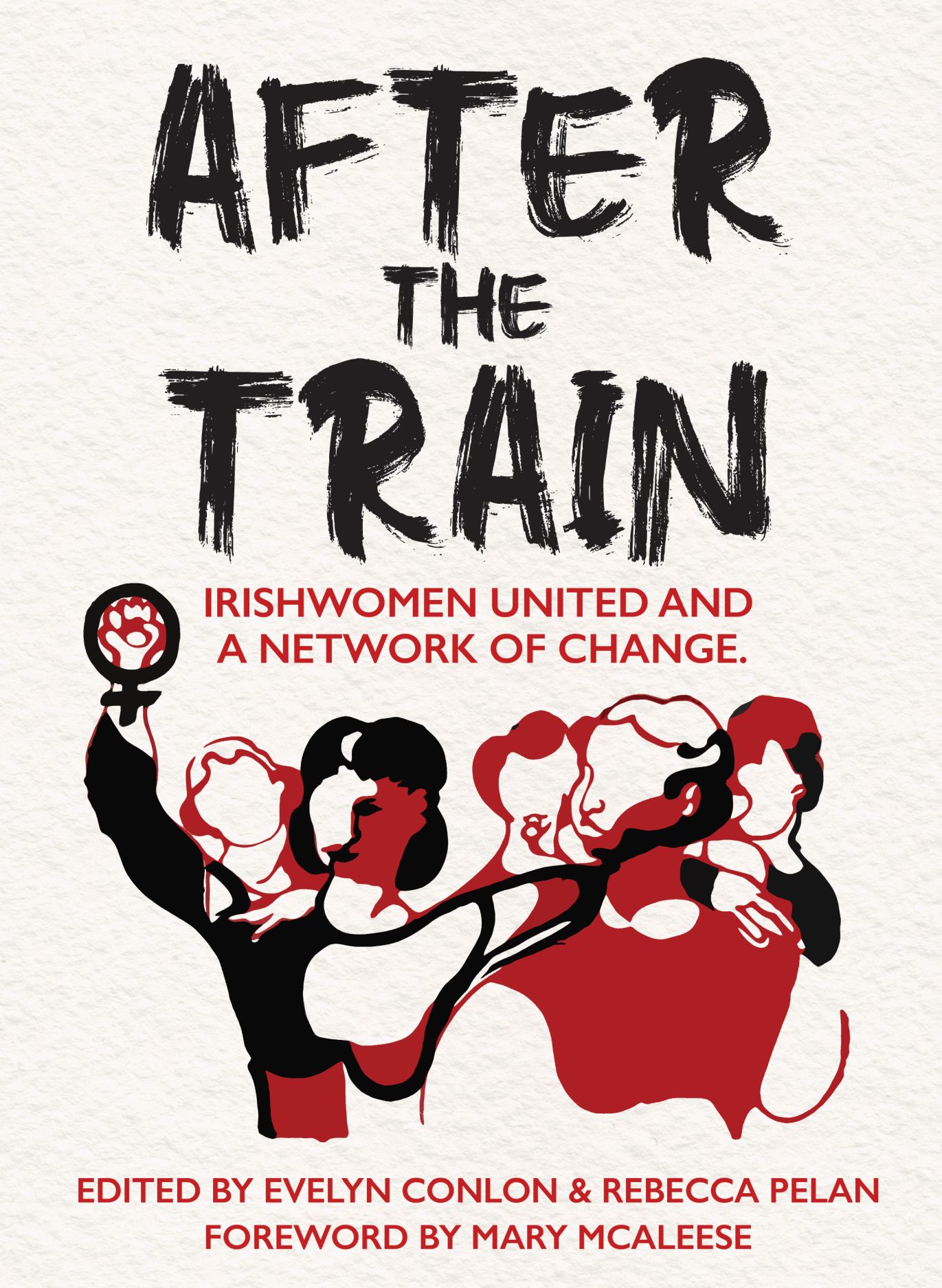
Evelyn Conlon and Rebecca Pelan, eds.
Dublin: University College Dublin Press, 2025. 150 pages.
ISBN: 9781068502309
After the Train highlights the efforts and achievements of Irishwomen United (IWU), a network of women who were critical to changing the role and influence of women in Irish society. These women came together after the famous contraceptive train ride from Dublin to Belfast on May 22, 1971, to lead the Irish feminist movement. This event brought great attention to the availability of contraception, one of the principal causes that ultimately led to the founding of IWU in 1975. While the first meeting was held in April, the group formally created a charter in June of 1975 detailing its objective of liberating Irish women from the oppression they experienced. This group met weekly for nearly two years until its last meeting in the spring of 1977. Ultimately, the IWU fragmented into a number of disparate groups with differing agendas. While not enjoying a long tenure, Irishwomen United transformed the role of women in Irish society by effective collective action.
Before IWU, the Irishwomen’s Liberation Group (IWLG) had a less ambitious agenda from 1970 through 1971. This organisation helped serve as an incubator for ideas and leadership that emerged in the more radical Irishwomen United. IWU focused on reproductive rights, sexuality, representation for women, and rape crisis work. After the Train allows the women who were involved in this movement to reflect on their tactics and strategies to overcome a history of discrimination and disempowerment of women in Irish society. The skill sharing among the members allowed women with different agendas within the movement to learn from one another, especially how to raise awareness and attention to the issues women deemed important. The contributors to this volume emphasise the support each gained from the energy created by the numerous and varied women involved in IWU.
This edited collection of the perceptions of IWU participants was published by University College Dublin Press fifty years after the founding of Irishwomen United. The many issues that Irishwomen United confronted included decriminalising homosexuality, founding the Dublin Rape Crisis Centre (RCC), supporting existing agencies like Cherish, the Well Women Centre, and the Irish Pregnancy Counselling Centre, advocating for equal pay for women in the workplace, developing women’s publishing and women’s studies programmes, and promoting Irish reproductive rights. Of all the issues IWU took on, probably the most important and symbolic was the Contraception Action Programme (CAP). This action eventually led to the widening availability of contraception for women in Ireland.
The centre of the work of Irishwomen United took place in weekly meetings held on Sundays at #12 Pembroke Street. While the meeting place is reported to be quite modest, the ambitions of those who met there was nothing short of transforming Irish society and culture. While various members of the group concentrated their efforts in different aspects of Irish feminists’ agenda, their collective effort concatenated in a series of changes that proved effective in overcoming historic cultural and policy-based confinement of women’s freedoms and opportunities in Irish society. The collective support that these meetings provided encouraged the women involved in IWU to believe that their work was not being done in isolation but was part of a much larger social movement intent on women’s liberation. The women in IWU had an expansive agenda from organising pickets, protests, and workshops to publishing a magazine, Banshee, and creating publishing outlets the Attic Press and Arlen House, and filing court cases aimed at liberating women and ending gender-based discrimination.
The importance of IWU was critical in achieving legal equality for women in the workplace, and this was achieved through the occupation of the Federated Union of Employees. This action prevented the Irish government from seeking and potentially gaining an exemption for the European Directive on Equal Pay. Subsequently, the Irish government passed the Employment Equality Act in 1977, ending legal discrimination in the workplace. While the efforts to achieve women’s sexual freedom may have taken much longer, the efforts of the IWU and earlier groups had liberated women from exclusion in the workplace. A similar direct-action protest took place in the summer of 1976 when a group of women challenged their exclusion from the all-male swimming hole, the Forty Foot, in Sandycove. Initially, fifty women swam where men had exclusively been privileged to swim. Ultimately, women won the right to swim alongside men in Sandycove, and this right is taken for granted today. Other actions taken by women included their challenge to exclusion in pubs or the refusal of publicans to serve pints to women. As with their other protests and challenges to male only privilege in Ireland, women earned the right to be served in pubs based on their effective challenge to practices inherited from previous generations now antiquated by women’s increased assertion of rights in Irish society.
Evelyn Conlon, one of the editors who wrote the first chapter, contends that the publication of this volume “is one step in the acknowledgement, remembrance and celebration of those who went before” (7). Her hope is that, by remembering history recorded in this volume, future generations of Irish women will not have to fight the same battle as women fifty years ago. Conlon and the others involved in IWU were not all of exactly the same mindset, and allowing nineteen women recollect in their own words provides a more comprehensive recollection than any effort by a single activist or historian to understand the numerous motivations and issues that confronted Irish women in the mid-1970s. This book builds upon previous important scholarship on the Women’s movement in this period including Linda Connolly’s The Irish Women’s Movement: From Revolution to Devolution (2001). However, by providing first person testimonials and recollections, After the Train provides the reader with a recognition of the complex and nuanced views of its participants and will be of great service to scholars interested in the numerous issues and actors involved in the Irish women’s movement of the mid-1970s. For example, Mary Dorney’s chapter highlights the movement for gay liberation and advancement of lesbian sexuality that was part of IWU. Ger Moane stressed how Irishwomen United provided an outlet for her to pursue what she perceived as a radical agenda for social change advancing a myriad of women’s causes. Anne Speed emphasised how Irish women were controlled by the state, society, husbands, and fathers in the 1970s and IWU empowered women, including in the area of employment and equality in the workplace.
Overall, the book demonstrates that social change does not occur by accident but the purposeful and effective organisation of those who lead movements which aim to improve women’s status and equality in Irish society. Constructivism has stressed the importance of ideas and agency in understanding the politics of social groups. Irishwomen United was a group of motivated and talented women who sought to bring social change and whose ideas effectively transformed Ireland not only in the 1970s but in the fifty years since its inception.
Works Cited
Connolly, Linda (2001). The Irish Women’s Movement: From Revolution to Devolution, London: Palgrave.


