
University of Almería, Spain | 17 March, 2026 | ISSUE 21 | Pages: 308-328
PDF | DOAJ | DOI 10.24162/EI2026-14428 | views
 2026 by María Elena Jaime de Pablos |
This text may be archived and redistributed both in electronic
form and in hard copy, provided that the author and journal are
properly cited and no fee is charged for access.
Throughout 2025, numerous Spanish institutions – including the Spanish Association for Irish Studies (AEDEI), the Spanish James Joyce Society, the Amergin University Institute of Research in Irish Studies, the Irish Studies Circle at the University of Granada, the Centre for Irish Studies Banna/Bond, the Centre for Irish Studies “Alka-Éire”, WAÉIRE (Irish Studies in Western Andalusia), the Centre of Irish Studies in Cáceres, the Hispano-Irish Association in Valladolid, and the Irish-Basque Association LagunCara – organised an extensive programme of conferences, seminars, lectures, literary readings, publications, performances, and festivals devoted to the promotion of Irish culture and scholarship. Many of these initiatives were supported by the Embassy of Ireland in Spain, first under Ambassador Frank Smyth – until August 2025 – and subsequently under Ambassador Brian Glynn.
Within this broad framework of activities, several academic conferences stood out for their international scope and thematic relevance. The international conference “The Multiple Representations of the Irish and Spanish Mother in Contemporary Literature”, organised by Madalina Armie, Germán Asensio Peral, and Verónica Membrive Pérez at the University of Almería (7–9 May), examined literary and cultural constructions of motherhood in Spain and Ireland within their respective social, cultural and economic contexts. Keynote speakers included Andrea O’Reilly, Catherine Dunne, Laura Freixas, and Pilar Iglesias Aparicio.
During the same week, the Spanish James Joyce Society – chaired by Juan Ignacio Oliva – together with members of the TRANSFER research group directed by Andrés Pérez Simón, organised the 34th James Joyce Meeting, “James Joyce, Reception and Literary Translation”, held at the Universidad Autónoma de Madrid (8–9 May). Papers addressed translation, reception, and broader literary-cultural dimensions of Joyce’s work, alongside contributions devoted to other Irish authors.
Later in the month, the University of Huelva hosted the 23rd AEDEI Conference (28–30 May), entitled “The Uses and Abuses of Irishness”. Organised by AEDEI – chaired by Pilar Villar-Argáiz, the Department of English at the University of Huelva, and the WAÉIRE research cluster, and coordinated by Auxiliadora Pérez Vides and José Carregal Romero, the conference explored multiple theoretical and cultural approaches to the concept of use within contemporary Irish Studies. Plenary speakers included Katherine O’Donnell (University College Dublin), who dealt with “The Uses, Abuses, and Misuses of Knowledge: The Report of the Republic of Ireland’s Mother and Baby Home Commission”, and Sylvie Mikowski (Université de Reims Champagne-Ardenne), who gave the talk “Small-Town Ireland in Contemporary Fiction”. Novelists Catherine Dunne and Claire Kilroy participated as keynote writers. In addition, the roundtable “Eibhear Walshe: In memoriam”, featuring Marisol Morales-Ladrón, Katherine O’Donnell, Pilar Villar-Argáiz, and José Carregal Romero, paid tribute to the great scholar, writer, and former Director of Creative Writing at University College Cork, who passed away in 2024.
Beyond conferences, AEDEI continued to promote research through bursaries, scholarships, and awards. In 2025, funding from the Strengthening Irish Studies in Spain and Beyond Programme and the Government of Ireland’s Emigrant Support Programme (ESP) supported two predoctoral bursaries awarded to Noelia Carmona for “Understanding the Representation of Masculinities in Contemporary Irish Literature: An Analysis of Donal Ryan’s Fiction from a Gender(ed) Perspective”, and Muriel Domínguez for “Selfhood in Contemporary Irish Literature by Women Writers in Ireland”, as well as a postdoctoral project, María Elena Jaime de Pablos’s “Emily Lawless, a Humanist Writer”.
In parallel, AEDEI scholarship schemes, named in honour of Eibhear Walshe, funded a predoctoral grant awarded to Natalia Jiménez for “Planetary Crisis and Post-Celtic Tiger Ireland: Precarity and Relationality in Sally Rooney’s Fiction”, and a postdoctoral/senior research grant awarded to María Auxiliadora Pérez Vides for “Corporality and Institutionalisation in Contemporary Ireland: A Gender-Based Analysis in John Banville’s Crime Fiction”. The 2025 Inés Praga Award for Best Doctoral Thesis was presented to María del Rosario Casas Coelho for “Cultural Approximations to the Literary Representation of Migration and Mobility in Colum McCann’s Work”.
Academic and cultural events flourished across Spanish universities in 2025. The Irish Studies Circle at the University of Granada organised some of them, for instance, the 8th International Seminar on Irish Studies: “Celebrating St Brigid’s” (28 January–1 February), which included the opening of the Yeats Sisters exhibition, literary readings by Eiléan Ní Chuilleanáin and Deirdre Sullivan, traditional music sessions with Louise Mulcahy, Matt Cranitch, Caoimhe Flannery, and Éimhear Flannery, Irish language and dance workshops, and a performance by the UGR Céilí Band. This Circle also coordinated some activities to celebrate St Patrick’s Day – a talk entitled “From the Shannon to the Shenandoah: Irish Music Across the Atlantic”, Irish dance workshops, traditional music sessions with the UGR Céilí Band, and readings from James Joyce’s works – mirroring celebrations organised nationwide on the occasion. Similarly, the Centre of Irish Studies in Cáceres (UEx) hosted the “I Jornada de Difusión de la Cultura Irlandesa de la UEx”, featuring lectures on Irish literature, mythology, and Celtic calligraphy, a plenary talk by Ana María Terrazas-Calero (Universitetet i Bergen), and traditional music sessions. Bloomsday (16 June) was commemorated in several Spanish cities, in the capital, through a tribute to Denis Rafter, which was organised at the Ateneo de Madrid by Sara Cantó, founder of the Bloomsday Society in Spain.
In 2025, Spanish scholars actively collaborated with colleagues in Ireland, thereby strengthening international research networks. This is illustrated, for example, by María Teresa Caneda-Cabrera (University of Vigo) who, together with Seán Crosson (University of Galway), organised the seminar “Interdependency and Vulnerability in Contemporary Irish Culture” (University of Galway, 21 January), featuring plenary speakers Sarah-Anne Buckley and Nessa Cronin and a session dedicated to Eibhear Walshe. J. Javier Torres-Fernández (University of Almería), in collaboration with Elaine Mahon and Anke Klitzing (Technological University Dublin), coordinated the JOFIS (Journal of Franco-Irish Studies) Imbolg Early Career Seminar (6 February), at which Mary Pierse – founder and trustee of the George Moore Association – delivered the keynote address.
The bond between Spain and Ireland is very much promoted by The Hispano-Irish Association in Valladolid, which, in co-operation with Valladolid City Council, organised the Ireland/Spain Events Programme 2025 (26–27 September). It brought together a series of cultural and academic activities highlighting historical and contemporary links between both countries. Among the most significant events were the Second Meeting of Ibero-Irish Associations – at which AEDEI was represented by Executive Board member Juan Elices Agudo – and the historical re-enactment of the Funeral of Red Hugh O’Donnell, commemorating the Irish leader’s connection with the city.
The vitality of Irish Studies in Spain in 2025 was further reflected in a number of significant publications. Among these were María Gaviña Costero’s El teatro de Brian Friel: bailando entre la ficción y la memoria (Peter Lang), which analyses Friel’s dramaturgy through postcolonial and memory-studies frameworks; Iria Seijas-Pérez’s Sapphic Adolescent Girls in Irish Young Adult Fiction: Queering Girlhood (Routledge), the first sustained study of sapphic protagonists in Irish YA fiction; A Nation, not a Parish: The Homewhere-s and Elsewhere-s of 1930s Irish Culture (Peter Lang), edited by Madalina Armie, Verónica Membrive, and Germán Asensio Peral, with the purpose of examining 1930s Irish culture as internationally engaged, politically responsive, and artistically innovative; José Ángel Monteagudo Martínez’s Brigid, Santa Brígida y Vera de Moncayo. De la divinidad celta Brigid al sincretismo cristiano de santa Brígida y su singular advocación en Vera de Moncayo (Institución Fernando el Católico), which offers a comprehensive study of Saint Brigid’s historical, literary, and devotional traditions; and a Special Issue 139 (2025) of Fontes Linguae Vasconum, co-edited by Asier Altuna García de Salazar, K. Josu Bijuesca, and Eva Pelayo Sañudo. This explores intersections between Irish and Basque literatures from the perspective of gender and post-violence studies.
Translations into Spanish also contributed significantly to the dissemination of Irish writing. Notable examples include Translation and its Discontents. La traducción y sus insatisfacciones (Small Fat Boy Press), a selection of poems by Gerry Murphy translated by Pilar Villar-Argáiz and Manuel Villar-Raso; Elena Pérez San Miguel’s translation of Caelainn Hogan’s The Republic of Shame, How Ireland Punished ‘Fallen Women’, La república de la vergüenza: Cómo Irlanda castigó a las mujeres descarriadas y a sus hijos (Errata Naturae); and Marta Callava’s translation of Seán O’Casey’s The Plough and the Stars, El arado y las estrellas (Ybernia), presented in Madrid in November 2025 with a dramatised reading of Act II.
Finally, in relation to publications devoted to Irish Studies, it is worth mentioning that Issue 20 of Estudios Irlandeses, the scholarly journal of AEDEI, was released in March 2025 including twelve research articles, two tributes, two interviews, and its regular sections on publications and academic events. Awarded the FECYT quality seal for editorial excellence and inclusive practices, the journal is indexed in major international databases, including Scopus, Web of Science (ESCI), MLA, DOAJ, ERIHPlus, and others.
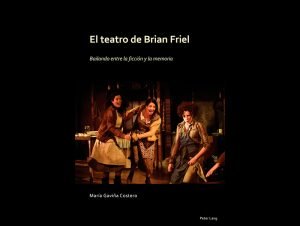
El teatro de Brian Friel: bailando entre la ficción y la memoria

Sapphic Adolescent Girls in Irish Young Adult Fiction: Queering Girlhood
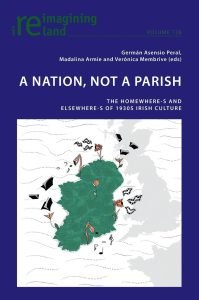
A Nation, not A Parish. The Homewhere-s and Elsewhere-s of 1930s Irish Culture
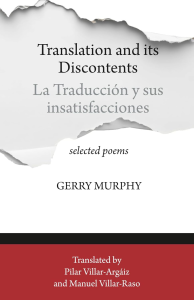
Translation and its Discontents. La traducción y sus insatisfacciones. Selected Poems by Gerry Murphy
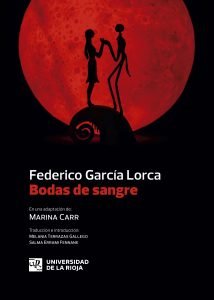
Federico García Lorca, Bodas de sangre, en una adaptación de Marina Carr


