
University College Cork, Ireland | 17 March, 2025 | ISSUE 20 | Pages: 277-285
PDF | DOAJ | DOI 10.24162/EI2025-13610 | views
 2025 by Rachel Gough |
This text may be archived and redistributed both in electronic
form and in hard copy, provided that the author and journal are
properly cited and no fee is charged for access.
This past year has seen the publication of several texts which consider the economic and social and creative actualities of Irish film and media production. Given the incredible success of Irish film on the global stage in the past few years as well as the devastating effects of the Covid-19 Pandemic on creative industries both nationally and internationally, there is perhaps no better or more appropriate time to consider the minutiae of film and media production in Ireland, revealing both the potential and precarity there.
In her review of Denis Murphy’s book Screen Workers and the Irish Film Industry Claire Mullaly praises Murphy’s “labour-centred study of Irish and Northern Irish screen industries” (279) noting the richness of Murphy’s research, which presents both statistical and filmic analysis to consider the ways in which screen workers can, have and could shape the screen industries both in Ireland and Northern Ireland. Mullaly highlights Murphy’s thematic focus on the nature of “good work”, which would seem to be at odds with the Irish and Northern Irish film industry’s reliance on “short-term contracts, casualisation and over-supply of labour are the requirements of a low cost and flexible workforce” (279).
Production practices also inform Tadhg Dennehy’s review of Lance Pettitt and Beatriz Kopschitz Bastos’ fourth entry in the series Ireland on Film: Screenplays and Critical Contexts: Maeve. Dennehy praises the inclusion Pat Murphy’s personal reflection on the film’s production of her 1981 film Maeve, noting that the inclusion “adds a valuable insider’s perspective, enriching the reader’s appreciation of its artistic and ideological significance” (283). Elsewhere in his review, Dennehy states that the inclusion of Maeve within the series “represents a significant and commendable contribution” by Pettitt and Kopschitz Bastos (282). In particular he praises Alice Butler and Emmie McFadden’s analyses of the film, which he notes serve to enhance an “understanding of the film’s nuanced themes but also situates Maeve within broader cinematic and socio-political discourses” (282-83).
The final piece included in this section is Ellen Scally’s review of the Irish Journal of Arts Management & Cultural Policy “Special Issue: Audiovisual Cultural Policy in Ireland”. Scally presents an insightful overview of the collection which “brings together diverse scholarship in media and film studies from across Ireland” (283) at a time when the pendulum seems to swing between widespread praise for successful production and a lack of interest on the part of the Irish State in developing robust policy and sustainable practice. Scally notes that this special issue is both privative and illuminating, but at its core it “speaks to a desire to strike while the iron is hot, and to push for improved, future-proof audiovisual policy in Ireland” (285).
There is a sense throughout the piece in this section and in the works reviewed that Irish film and media is at a crossroads, the incredible quality of work that can and has been produced in this country can be taken as fact, the question that remains is how can this production be made more sustainable, more equitable and less precarious for the creatives whose work we so admire?
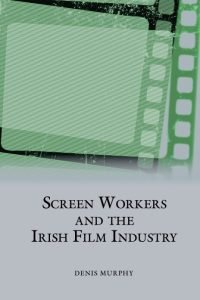
Screen Workers and the Irish Film Industry
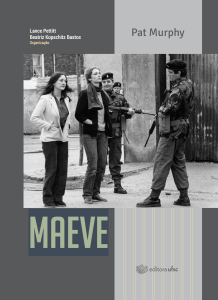
Ireland on Film: Screenplays and Critical Contexts: Maeve
“Special Issue: Audiovisual Cultural Policy in Ireland”


