
 by
Carlos Menéndez-Otero.
This text may be archived and redistributed both in electronic
form and in hard copy, provided that the author and journal are
properly cited and no fee is charged for access.
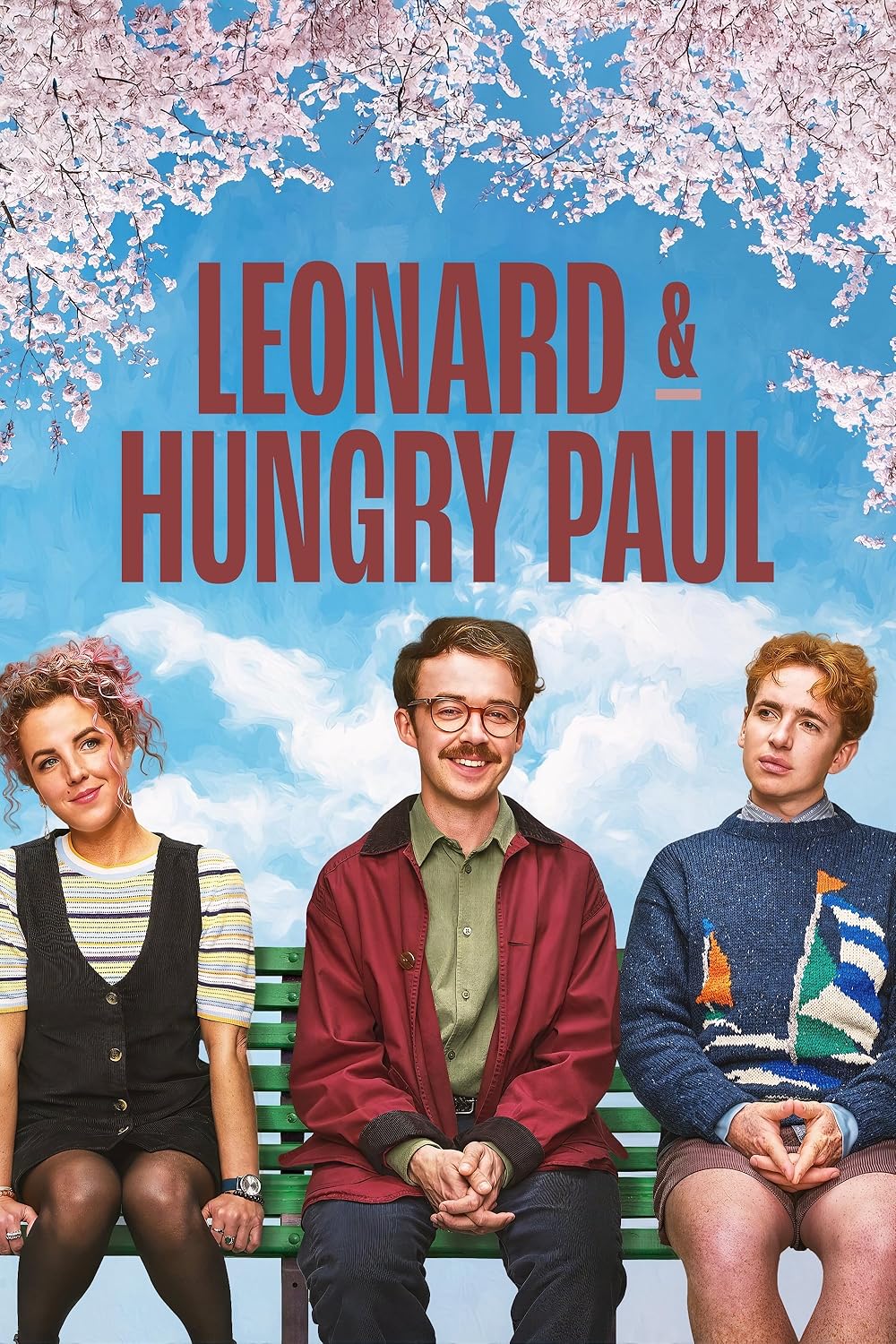
BBC Northern Ireland and RTÉ (2025)
Approaching a cinematic or televisual adaptation of a favourite book is always challenging. On the one hand, you cannot help but feel a happy tinge of validation, as if the very fact that it has made it to the screen proves that you were right in recommending it to friends and family as a worthy read and, therefore, there is nothing intrinsically odd, snobbish or wrong with your literary taste. On the other, a pang of anxiety is inevitable, as you are keenly aware that the adaptation creators’ view of the story and characters will differ from your own and that, once you sit through it, regardless of whether you like it or not, there will no going back for your imagination. Whatever mind images you created of the characters, spaces and scenes while reading the book will be gone forever, irredeemably replaced – or at least intertwined – ad aeternam with those from the film or series.
When I first heard that BBC Northern Ireland and RTÉ would be airing a Subotica-produced miniseries based on Leonard and Hungry Paul, Rónán Hession’s best-selling début novel from 2019, I was still very fond of the images it had spawned in my mind when I first read it three years earlier. Although not exactly a literary masterpiece, the 256-page novel about a couple of nerdy, boardgame-loving, thirty-something friends from a suburban somewhere trying to navigate the postmodern world and deal with the inevitability of change at their own (premodern) pace really caught me. Maybe it was that the novel manages to shroud the dull struggles, petty victories and defeats, and common miseries and joys of contemporary suburban middle-class life in a cloak of compelling epic lyricism. Maybe it was the sincere, non-judgmental affection the author shows throughout for his two unashamedly quiet, kind, quirky, unassuming protagonists. Or maybe it was just that, as I went through the pages of Leonard and Hungry Paul, Hession’s stylisation of social awkwardness, contemplation, silence, and a suburban (perhaps, even) normal everyday made me think of different works by, among other Irish writers and filmmakers, Sally Rooney, Donal Ryan, Claire Keegan, Lenny Abrahamson, John Carney, and, albeit much less frequently, even James Joyce and Samuel Beckett. All the while, I was enticed to speculate which of these implicit intertextual connections were actually intended by the author and which instances of my own reader-based, inferred intertextuality.
That aside, two of the names in the list above, Lenny Abrahamson and Sally Rooney, allow us to transition from Hession’s novel to its audiovisual counterpart. For all their flaws, the Abrahamson (co-)directed adaptations of Rooney’s Normal People (BBC, Hulu, and RTÉ, 2020) and Conversations with Friends (BBC, Hulu, and RTÉ, 2022) are exemplary in their enviable, deliberate confidence. In those cases, only a few minor adjustments to their source materials, Abrahamson’s characteristically austere film style, and the restrained performances of their casts – at the time, largely unknown – were necessary to render the narrative both comprehensible and attractive to audiences worldwide. For all its virtues, however, the six-episode TV version of Leonard and Hungry Paul seems much too worried that its literary source and the charisma of its lead actors – Alex Lawther, Laurie Kynaston and Jamie-Lee O’Donnell as Leonard, Hungry Paul and Shelley, respectively – might not be enough to offset the inherently untelevisual moments of introspection and inaction carried over from the novel into Richie Conroy and Mark Hodkinson’s screenplay.
It may have been that the decision to drown most of these moments in over-expositional voice-over narration undermines any claim that the series is an ode to quietness, as the book had been, and that this exposes the creators’ limited faith in the source material, as well as their horror vacui. For comparison, imagine a narrator telling you what Connell (Paul Mescal) and Marianne (Daisy Edgar-Jones) are feeling every time they fall silent in Normal People: the application of this comparative device is a reasonable description of what happens on (too) many occasions throughout Leonard and Hungry Paul. However, there is something else about the voice-over narration: the attentional weight it takes away from the visuals gets massively amplified by the fact that it is delivered by Julia Roberts, an A-list Hollywood star widely known worldwide.
Why her of all people? Of course, the idea that your mind first conjures up as an answer is “the need for publicity”. In today’s saturated, ultra-competitive media landscape, without the support of a major star, a deliberately non-controversial – oh well, we all know this is not, nor aims to be, Adolescence (Netflix, 2025) – modestly-budgeted, Anglo-Irish co-production such as Leonard and Hungry Paul would most likely have faced a much rockier road to finding an (inter)national audience and might not even have been made. However, once we start considering the Julia Roberts persona and other features of the series that either were not in the book or, if they were, were not as central to the narrative, what soon emerges is the certainty that the series’ creators aimed to distil the novel. The intention was that it would fit like hand-in-glove within the cozy, easily-pitchable mould of the mainstream rom-com: or, rather, the Hollywood-financed appropriation of the genre that thrived in the UK for about a decade following the international success of Four Weddings and a Funeral (Mike Newell, 1994), and that films such as About Adam (Gerard Stembridge, 2000) and Goldfish Memory (Liz Gill, 2003) tried to replicate in Irish urban settings with mixed results; something that the late Martin McLoone rightly pointed out in Film, Media, and Popular Culture in Ireland (2008: 37-50).
If we allow ourselves to approach Leonard and Hungry Paul through this generic lens, many elements that might initially seem odd – or even at odds with the novel – become much easier to understand, and perhaps even forgive. The uncalled-for presence of Julia Roberts, who is still the undisputed queen of the Hollywood rom-com and, for that matter, female lead of one of the tentpoles of its turn-of-the-century British appropriation, Notting Hill (Roger Michell, 1999); the voice-over narration, which is a recurring feature of the genre; the slick, IKEA commercial-like production design and cinematography, which make most of the interiors and exteriors in the series look almost as glossy, modern, sophisticated, and impersonal as Silicon Valley or, for that matter, the Dublin of About Adam and Goldfish Memory. Added to these are the concentration of much of the action on a streamlined, Hawksian Bringing Up Baby-like version of the romance between Leonard and Shelley at the expense of the bromance between Leonard and Hungry Paul and other character relationships and interactions; Shelley’s explicit Manic Pixie Dream Girl (Rabin, 2007) overtones, basically a combination of the romantic interest of another nerdy fictional Leonard, Penny (Kaley Cuoco) in The Big Bang Theory (CBS, 2007-2019), Summer (Zooey Deschanel) in the quintessential millennial rom-com, (500) Days of Summer (Marc Webb, 2009), and Jamie-Lee O’Donnell’s own star persona – mostly shaped by her role as the feisty, foul-mouthed Michelle in Derry Girls (Channel 4 and Netflix, 2018-2022). Leonard’s visual design, which – despite the feeble attempt to conceal it behind a hipster moustache and glasses – clearly evokes, along with Alex Lawther’s performance, both Joseph Gordon-Levitt’s character in (500) Days of Summer and the turn-of-the-century persona of the undisputed king of Britpop rom-com and male lead of Notting Hill, Hugh Grant. The commodification of a harmless, sanitised version of British (and Irish) quirkiness and accent for international consumption via the two male protagonists and, especially, an ensemble of supporting characters that could well have been lifted from the storyworlds of Four Weddings and a Funeral, Notting Hill, About a Boy (Chris and Paul Weitz, 2003), Love Actually (Richard Curtis, 2003), or the Bridget Jones saga (Sharon Maguire, Beeban Kidron and Michael Morris, 2001–2025). The occasional inclusion of animated elements à la (500) Days of Summer to underscore the characters’ inner emotions. The glossy red-green-blue palette of the two main versions of the promotional poster and their layouts, with one showing the protagonist couple sitting close together alone on a bench, and another with them sitting quite apart beside Hungry Paul – maybe not so popular as the back-to-back or the embracing/kissing couple layouts with which we are familiar, but that are definitely associated with the rom-com genre.
Taken together, these features confirm that Leonard and Hungry Paul is a televisual product eager to be read primarily as a mainstream rom-com and, more specifically, as a crossover of two of the films mentioned above – Notting Hill and (500) Days of Summer – and only secondarily as a literary adaptation of the eponymous novel. And it is only when we accept this generic shift, when we take Leonard and Hungry Paul for what it really is, that we can begin to truly enjoy all this little charm of a series has to offer the viewer.
You may wish to note the above.
Works Cited
McLoone, Martin (2008). Film, Media, and Popular Culture in Ireland. Cityscapes, Landscapes, Soundscapes. Dublin: Irish Academic Press.
Rabin, Nathan (2007). “The Bataan Death March of Whimsy Case File #1: Elizabethtown.” A.V. Club (January 25). https://www.avclub.com/the-bataan-death-march-of-whimsy-case-file-1-elizabet-1798210595.


