
University of Almería, Spain | 17 March, 2025 | ISSUE 20 | Pages: 286-314
PDF | DOAJ | DOI 10.24162/EI2025-13646 | views
 2025 by María Elena Jaime de Pablos |
This text may be archived and redistributed both in electronic
form and in hard copy, provided that the author and journal are
properly cited and no fee is charged for access.
The most outstanding entities promoting all aspects related to the history, society, culture, art and literature of Ireland in Spain: The Spanish Association for Irish Studies (AEDEI), The Spanish James Joyce Society, The Amergin University Institute of Research in Irish Studies (University of A Coruña), The Irish Studies Circle at the University of Granada, The Centre for Irish Studies Banna/Bond (which includes the universities of Burgos, Deusto, La Rioja and Zaragoza), the Centre for Irish Studies “Alka-Éire” (University of Alcalá), WAÉIRE, Irish Studies in the West of Andalusia, the Hispano-Irish Association in Valladolid and The Irish-Basque Association LagunCara have carried out a great deal of academic and non-academic events during 2024, very often with the extraordinary support of the Irish Embassy in Spain, brilliantly represented by Ambassador Frank Smyth, who has, no doubt, strongly committed himself to the flourishing of Irish Studies in our country, and the EFACIS Irish Itinerary, a cultural initiative that sends Irish authors and artists on tour through Europe so they can take part in events hosted by members of EFACIS centres of Irish studies.
The numerous activities: conferences, seminars, lectures, literary readings, interviews, publications, historical re-enactments, festivals, etc., organised by these entities all over Spain in 2024 clearly show the vitality of Irish Studies in our country, a place in which not only national, but also international scholars, artists, musicians, writers love gathering to celebrate the richness of Irish history, culture, literature, cinema, art, music and dancing. As early as 29th January 2024, The Amergin University Institute of Research in Irish Studies hosted a commemorative event for the tenth anniversary of the death of the Irish poet, Nobel Prize winner and Honorary Doctor by the University of A Coruña, Seamus Heaney. The event was coordinated by Miguel Alonso Giráldez. Well-known scholars like David Clark, Xosé Manuel Sánchez Rei or Antonio Raúl de Toro Santos (Amergin Honorary Director), and the poet Paddy Bushe contributed to it. A few days later, the Irish Studies Circle at the University of Granada launched the “VII International Seminar on Irish Studies”, framed within “The Irish Week”. Directed by Pilar Villar Argáiz – the President of AEDEI – and co-directed by Paula Camacho Roldán and Encarnación Hidalgo Tenorio, it took place from 31st January to 2nd February. It included literary readings by Emilie Pine, Dermot Bolger, Christopher Reid and Róisín Tierney; a discussion with the award film director of The Quiet Girl, Colm Bairéad; a concert by the UGR Céilí Band; two workshops – one on Irish Dance and another one on Irish language; the launch of the monograph From Landscapes to Cityscapes: Towards a Poetics of Dwelling in Modern Irish Verse by Marjan Shokouhi; a substantial number of thought-provoking lectures; and gorgeous performances by Irish musicians Louise Mulcahy and Matt Cranitch.
In February, WAÉIRE, Irish Studies in the West of Andalusia, was founded. This academic platform for Irish Studies is made up of a team of teachers, researchers and students from various universities in Western Andalusia – University of Córdoba, University of Huelva, University Pablo de Olavide (Seville) and University of Sevilla. Auxiliadora Pérez Vides, from the University of Huelva, is the head of this new entity. On 9th April, WAÉIRE arranged two events, one organised by Auxiliadora Pérez Vides and José Carregal Romero at the University of Huelva, the “III International Seminar: Cultural Waves in Ireland and Irish Studies”. Eugene O’Brien (Mary Immaculate College, Limerick), Marisol Morales Ladrón (University of Alcalá), Pilar Villar-Argáiz (Universidad de Granada) and the musicians Rubén Díez and John Conde were the seminar keynote speakers. The other event, “I Jornadas sobre Escritura, Traducción y Edición: The Thrill of it All”, was hosted by Mª Ángeles Conde Parrilla, María Losada Friend, Alberto Manuel Egea Fernández-Montesinos, Nuria Fernández Quesada and Inmaculada Mendoza García at the University Pablo de Olavide. Talks given by Isabel Márquez Méndez and Enrique Redel Lozano and an interview with Joseph O’Connor, “Joseph O’Connor on Translation”, structured it.
Around St. Patrick’s Day, on 17th March, following the tradition, Estudios Irlandeses, the scholarly e-journal of the Spanish Association for Irish Studies (AEDEI), launched its Issue 19 (2024). It contains twelve articles that cover different topics, two interviews – one with Deirdre Sullivan and another one with Phillip McMahon, two think pieces –the first by David Pierce and the second by John Rodden, and the usual section “The Year in Review” subdivided into three parts: Irish Studies around The World – 2023, Irish Film and Media Studies Publications – 2023 and Irish Studies In Spain – 2023.
In May, the 33rd James Joyce Conference was held at the University of Málaga from 9th to 10th with the title “Un Siglo de James Joyce: Ensamblajes Modernistas Ayer y Hoy” / “A Century of James Joyce: Past and Present Modernist Assemblages”. It, according to the organizers, Juan Ignacio Oliva, the President of the Spanish James Joyce Society (University of La Laguna) and Rosario Arias (University of Málaga), had the purpose of examining the impact that Joyce’s work has had and continues to have on other literary texts through the theory of assemblage (or “Assemblage theory”), as part of the “network turn”, developed by literary critics such as Gilles Deleuze and Felix Guattari, Bill Brown or Manuel DeLanda among others.
The AEDEI annual meeting also took place, as it is customary, in May, from 29th to 31st. Under the term “Ethics”, the 22nd International AEDEI Conference was hosted by the Department of Modern Philology and the Centre for Irish Studies “Alka-Éire” at the University of Alcalá. The organizing committee – Marisol Morales (President), Alberto Lázaro (Treasurer), Juan F. Elices (Secretary), and Marta Martín Amor (Communications Officer) – welcomed seventy-two attendees from eleven different countries: Ireland (north and south), France, Portugal, Italy, Belgium, the Czech Republic, Switzerland, Turkey, Brazil, Japan and Spain. Their research covered many areas of Irish Studies from an ethical lens to bring awareness to misrepresentation, invisibility, untruth or the unveiling of silences from the past. The event welcomed the prestigious keynote speakers Anne Fogarty (University College Dublin), who gave the talk “‘#occupylanguage’: Reading Ethics and Care in Contemporary Irish Women’s Poetry”, and Hedwig Schwall (University of Leuven), who offered a talk on “Renewing the Idea of Responsibility: Feminine/Motherly Interactions in Anne Enright, Lucy Caldwell and Mary Costello”. These two latter writers were also present at the conference as EFACIS Irish Itinerary Guest Writers. Their stimulating contributions helped those who listened to them to understand how ethics is represented in literature produced both in Northern Ireland and in the Republic of Ireland. This scholarly encounter was also enhanced by a performance, Denis Rafter’s Solo Play Plato and Me, and a Ceili Dancing Workshop by Nora Moroney (Trinity College Dublin).
On 16th June, Bloomsday was celebrated worldwide and, obviously, Spain was no exception. Many cities offered activities to pay a tribute to James Joyce by reading, recreating and discussing his masterpiece Ulysses. For example, the Madrid Bloomsday Society and the Irish Embassy organised the “Bloomsday Festival 2024”. Its programme included Penelope’s Dream Opera by Pedro Halffter, performed in the Ateneo de Madrid on 13th June – it was also performed later in the Teatro Bretón in Logroño on 15th June – together with contributions by very prominent guests, such as Lisa Hannigan (singer), John Banville (writer) and Eimear McBride (writer) on 16th June. Malaga also celebrated James Joyce’s novel Ulysses on the 16th June in collaboration with the University of Malaga and other entities. The event, both literary and musical, was introduced by Professor Rosario Arias. Later that month, the “Amergin Poetry Festival” in A Coruña was celebrated from 27th to 29th. Attendants could enjoy talks on Irish poetry and Ireland’s relationship with Galicia, apart from cultural and musical activities. Poets, artists, singers and pipers participated in them. But not all was celebration in June 2024. A great scholar and writer, a professor at University College Cork, and a most dear friend of AEDEI, Eibhear Walshe, sadly passed away. His words still resonate in Estudios Irlandeses, Issue 15 (2020), in an interview carried out by Pilar Villar Argáiz: “‘Stretching the Imagination into another World’: An Interview with Eibhear Walshe”.
On 13th September, the Hispano-Irish Association, with Carlos Burgos acting as its President, together with Valladolid City Council, organized the I International Encounter of Spanish-Irish Associations – more than twenty-five associations from Ireland, Portugal, the United States and different Spanish provinces gathered there to talk about the Camino de Santiago that begins in Dublin, Saint Patrick’s festivals, the death of Red Hugh, the Irish Colleges in Spain and many more things – and participate in the historical re-enactment of Irish Prince Red Hugh O’Donnell’s Funeral, which was a delight for the thousands of people who could witness it. Within the context of this event, the following day, the writer Pedro Luis Chinchilla gave the talk “Los prisioneros de la Armada en Irlanda” – “The prisoners of the Armada in Ireland”. From 20th to 22nd September, a new edition of the Cáceres Irish Fleadh took place. It celebrated its 20th anniversary. The uileann piper John McSherry played at it for the satisfaction of the attendants, who could also enjoy sessions of Irish traditional music and workshops on Irish dance and on how to play the fiddle, the uilleann pipes or the bodhrán among other Irish instruments. In Galicia, on 23rd, the Irish writer Dylan Brennan gave a talk entitled “Lecture with Reading on Amergin: The First Mythical Poet of Ireland”. It was organized by the Provincial Council of A Coruña in collaboration with The Amergin University Institute of Research in Irish Studies.
With the support of the EFACIS Irish Itinerary 2024, the Centre for Irish Studies Banna/Bond hosted the “VIII International Seminar on Halloween: Posthuman Intersections in Irish Literature” at the University of La Rioja from 28th to 29th October. Attendants could enjoy a reading by and interview with the Irish writer Naoise Dolan and lectures by Michael G. Cronin (Maynooth University, Ireland), Alicia Muro Llorente (University of La Rioja), María Jesús Lorenzo Modia (University of A Coruña) and Margarita Estévez-Saá (University of Santiago de Compostela). It was coordinated by Melania Terrazas Gallego. Banna/Bond also offered an International Seminar “The Transforming Power of Irish Literature” at the University of Burgos, again with the support of EFACIS Irish Itinerary. Organised by María Amor Barros and held from 30th to 31st October, it offered readings, discussions and workshops with Irish writers Kerri ní Dochartaigh and Naoise Dolan. Colum McCann’s and Roddy Doyle’s works were also explored for teaching purposes.
As part of the research project INTRUTHS 2: “Articulations of Individual and Communal Vulnerabilities in Contemporary Irish Writing”, activities (in-person and online) were presented at the University of Vigo on 31st and 7th November. Alfred Markey (University of León) and the Irish writers Evelyn Conlon and Éilís Ní Dhuibhne were in its programme. In the Basque Country, the Irish Studies Centre in the University of Vitoria, Eusk-Cara, collaborated with the II edition of the Tartalo Symposium which took place from 4th to 10th November. Sheila Armstrong and Jan Carson were its guest writers. On 14th November, The Circle of Irish Studies at the University of Granada paid a tribute to Edna O’Brien with the literary activity “Reading from The Country Girls by Edna O’Brien”. The reading was carried out in English, Irish and Spanish. Meant to celebrate the life and work of one of Ireland’s leading female writers, it was held at one of the most genuine Irish Pubs in Granada, Daly’s.
Elsa Adán Hernández (University of Zaragoza) and Angelos Bollas (Maynooth University, Ireland) arranged the online conference “Health/care in (times of) Crisis: Mapping Sally Rooney’s Universe to Explore the Effects of Globalisation on Irish Society and on Interpersonal Relationships” over two days, from 28th to 29th November. Their aim was to bridge the world of literature and reality by examining health and healthcare together with their role in contemporary Irish society as depicted in Sally Rooney’s novels. An expert on this writer, María Amor Barros was the keynote speaker. Sally Rooney was also the subject matter of the lecture “‘People can really change one another’: Vulnerability and Care in Sally Rooney’s Fiction”, which was given by José Carregal Romero (University of Huelva) at the University of Vigo as part of the PhD Seminar “Vulnerability: A Critical Framework for Literary and Cultural Studies”.
In 2024, Spanish Scholars have presented their work on Irish Studies not only at academic events carried out in Spain, but also at international conferences hosted beyond our borders by highly prestigious entities covering this field of research such as EFACIS and IASIL to mention but two umbrella ones. Some of these scholars have received academic recognition through awards. The Centre for Ibero-American and Transatlantic Studies FGUMA-UMA, via the María Zambrano Centre for Transatlantic Studies of the University of Málaga, called for a new edition of the Spanish-Irish Award of the Aula María Zambrano de Estudios Transatlánticos with the aim of encouraging research on the relations between both countries. This award was granted to the authors of the study “La influencia de la Gran Armada (Invencible) en las relaciones hispano-irlandesas contemporáneas (siglos XX-XXI)”, Natalia Mateo Ripoll and Juan José Oña Fernández.
AEDEI also granted awards, one for the best TFG –Bachelor’s Dissertation– to Mónica Bru for “‘They laugh heartily’: Humour, Laughter and Power in Samuel Beckett’s Endgame and Sarah Kane’s Blasted”, and another one, the Ines Praga Award, for the best Doctoral Thesis, which was given ex aequo to Catalina Wajs Tauscher for “An Enriching Interplay in Irish Culture: The Presence and Functions of Traditional Folklore in Four Contemporary Irish Novels”, and Regina Martínez Ponciano for “Oscar Wilde, the short story writer”. In addition, AEDEI funded research in the field of Irish Studies in Spain through scholarships, which were possible thanks to the support of the “Emigrant Support Programme” of the Government of Ireland and the Embassy of Ireland in Madrid. One was granted to me, María Elena Jaime de Pablos, to carry out a post-doctoral/senior research project, and two to Noelia Carmona Rivero and Muriel Domínguez Viso respectively to complete their doctoral projects.
A substantial number of Irish Studies scholars in Spain have seen their research published in journals and books. This section ends up with insightful reviews of some of these publications. Among translations, we find two of works by James Joyce: José Ruiz Más published A penique el poma y otros versos (Madrid: Tirant 2024) and Máximo Aláez Corral James Joyce: Un retrato del artista en su juventud (Madrid: Akal, 2024). Both works illustrate the ever-lasting interest in the author of Ulysses.
Two collections of essays edited by Maria Gaviña-Costero, Dina Pedro, and Dónall Mac Cathmhaoill: ‘Lost, Unhappy and at Home’: The Impact of Violence on Irish Culture. Volume I: Literature (Peter Lang. Series: Reimagining Ireland, Vol. 133), and ‘Lost, Unhappy and at Home’: The Impact of Violence on Irish Culture. Volume II: Socio-Cultural Aspects (Peter Lang. Series: Reimagining Ireland, Vol. 134), were also issued in 2024 to delve into the representation of violence and its impact in Irish Cultural products. A third collection of essays, edited by María Amor Barros, Transcultural Insights into Contemporary Irish Literature and Society: Breaking New Ground (New York: Routledge, 2024) gathers contributions of many AEDEI members which examine the transcultural patterns that permeate Irish literature since the twentieth century, and engage with the ongoing dialectics between literature and society.
María Cristina Guerrero-García’s book Quite Another Thing: Ireland in the Complete Works of Oscar Wilde was awarded the prestigious III José Romera Castillo Prize for Philological Research. It explores Wilde’s complete works to shed light upon its stylistic aspects and sociocultural contexts. Monographs like Cassandra Tully de Lope’s Masculinity and Identity in Irish Literature: Heroes, Lads, and Fathers (New York: Routledge, 2024) also enrich the Irish Studies panorama by using corpus tools to examine the representation of Irish masculinities in fiction written by male Irish authors.
Our heartfelt congratulations to all the authors above referred on their achievements and our most sincere gratitude to those writing the following reviews of Irish-themed books published by Spanish scholars. They all contribute to give evidence that research on Irish Studies has grown enormously in the last decades both in quantitative and qualitative terms thanks to different generations of academics who devote themselves entirely and passionately to this wonderful area of expertise.
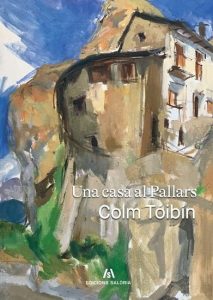
Una casa al Pallars
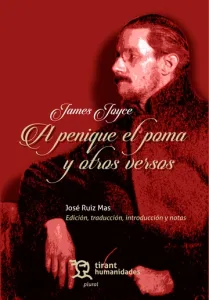
Joyce, James. A penique el poma y otros versos
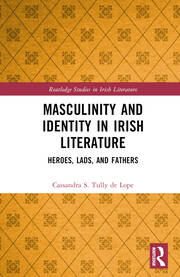
Masculinity and Identity in Irish Literature: Heroes, Lads, and Fathers
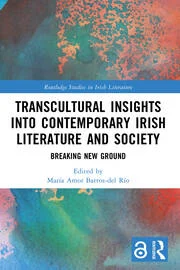
Transcultural Insights into Contemporary Irish Literature and Society
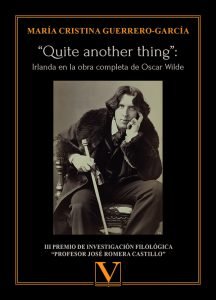
“Quite another thing”: Irlanda en la obra completa de Oscar Wilde
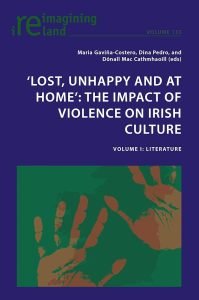
‘Lost, Unhappy and at Home’: The Impact of Violence on Irish Culture. Volume I: Literature
‘Lost, Unhappy and at Home’: The Impact of Violence on Irish Culture. Volume II: Socio- Cultural Aspects


