
University College Cork, Ireland | 17 March, 2026 | ISSUE 21 | Pages: 237-293
PDF | DOAJ | DOI 10.24162/EI2026-14290 | views
 2026 by Barry Monahan |
This text may be archived and redistributed both in electronic
form and in hard copy, provided that the author and journal are
properly cited and no fee is charged for access.
Introduction
Anyone familiar with Julia Donaldson’s The Gruffalo will identify an aspect of game theory in the narrative of the children’s book also evident in contemporary geopolitics. The wily mouse, by far the most vulnerable of the woodland animals, strategically uses the threat of the horrible, but gormless, Gruffalo to outwit his stronger and less savvy predators. The story ends when the monster absconds, the other rodent-eating animals have scarpered, and the mouse sits down to enjoy a nut. A certain artificiality of the natural ecosystem balance prevails. However, the basic message is clear, and it resonates with recognisable strands of game theory. Quite simply: you do not have to be the most powerful player to succeed or survive.
Whether or not the global competition for cultural space is less aggressive than its geopolitical equivalent, it nonetheless requires careful strategic negotiation. Ireland enjoys a potency of cultural capital well beyond its size, but when it comes to the economics of the international film industry the country is a relatively small player. It requires judicious dialogue between the country’s screen production, administrative and policy-making bodies and their international peers to navigate and manage this discrepancy. However, this local incongruity is not an anomaly in the wider global network, and it is one that may even work in our favour as a minor producer. Imbalances between cultural and economic influences are evident right to the top of the industrial food chain. For example, Bollywood is the largest film producer in numerical terms in its production output and audience numbers, but Hollywood is composed of the some of the wealthiest and most influential studios with the widest distribution network. Notwithstanding this, market unpredictability and rapid technological developments have continued to initiate reconfigurations and have introduced exceptions that frequently challenge these hegemonies. The development of streaming platforms has facilitated alternative modes of spectatorship that have the potential to create a more level playing field for marginal indigenous cinemas and filmmakers. Perennial anomalies also arise that disturb predictable forces of dominance: last year, the Chinese film Ne Zha 2 generated colossal box office revenue placing it at the top of the profits list in 2025. Within the volatile, asymmetrical push-and-shove melee of international cultural production and distribution, there is a definite strategic benefit to being a minor player in the global game.
The advocates for our indigenous industry are proficient guardians of our international cultural currency, and the Irish screen ecosystem has never been healthier. Between them, last year, Fís Éireann/Screen Ireland, Screen Producers Ireland, the Arts Council, Coimisiún na Meán and the artists guilds played a role in the production or distribution of over eighty feature-length fiction films, television series episodes and documentaries, as well as a considerable number of short projects. The core value shared by these bodies is the protection and promotion of Ireland’s cultural expression and self-representation, and the maintenance of Ireland’s screen media platform as a site for the telling of “our” stories. This quality is front and centre in, and reiterated throughout, their publicised literature, promotions documentation and commissioned reports. In that, we can celebrate the unanimity with which the Irish screen institutions fight to support and strengthen indigenous filmmakers’ creative endeavours. At the beginning of 2025, these organisations played a vital role in securing enhanced copyright protection for screenwriters, and by this time last year important discussions were underway on considering a national levy for international streaming platforms which provide access to material in the Republic (in a way that had already been implemented in a number of jurisdictions across Europe). The on-going question of the impact of AI-generated content on the industry has continued and developments in the sector are being closely monitored.
When we review the year, we find that the creative spaces and mechanisms provided by the Irish screen ecosystem have continued to facilitate some of the highest quality productions, proving this minor cinema’s capacity to deliver authentic expressions as our filmmakers demonstrate adeptness in creating artistic expression in the universal audio-visual language and, encouragingly, more frequently, through our native tongue. International awards also act as an endorsement of the excellence of indigenous filmmakers’ work, and the consequences of such approbation are felt in a very real way at home as they are recognised abroad. On the back of Academy Award nominations and wins, and victories at other international festivals and ceremonies, our best talent is propelled into conspicuous networks of production with increased contractual bargaining power. This has direct implications not only in giving a moral boost to the national filmmaking community, but also in creating confidence among funders and among possible co-production collaborators. Successful Irish directors, writers and film artists have continued to work on local productions of modest scale and budget, and a whole new generation of Irish actors like Sarah Bolger, Jessie Buckley, Kerry Condon, Bronagh Gallagher, Éanna Hardwicke, Barry Keoghan, Paul Mescal, Cillian Murphy, Ruth Negga, Alison Oliver, Jack Reynor, Saoirse Ronan and Andrew Scott have marked our identity on a global map and increased the visibility of our native productions by returning to work on indigenous projects. Another optimistic characteristic of our current cinematic culture is evident in the extent to which filmmakers are moving from substantial career portfolios of short-film work to début feature productions, or returning from positively-received first films to second and third feature-length projects, or work on television series. On the back of a strong remit by TG4 to develop high-quality documentaries, unapologetically and unreservedly delivering material in the national language, the format is exceptionally well continued here. No doubt bolstered by the success of An Cailín Ciúin four years ago, so too are we seeing some remarkable fictional work being produced in Irish.
As many of the reviews below attest, it is favourable that many of the films discussed defy simple classification as “Irish” in any traditional way. Without having sacrificed a strong sense of national identity, many local stories and characterisations display evidence of fitting seamlessly into established generic frameworks, and Irish artists and filmmakers have found unique forms of expression in repurposing genre films. Some of this year’s reviewers also implicitly or explicitly call upon critics to move beyond older evaluation criteria in their approaches, frameworks and the themes used to assess local productions. The same might be said of our present contributions discussing last year’s theatrical work. Ever demonstrative of formal innovation and a radical avant garde tackling of the most pressing of contemporary issues, Irish drama has struck a fine Janus-faced balance between reflecting on the nation’s theatrical heritage and social history, and a forward-thinking consideration of present concerns; both local and global.
Claire Mullaly considers the Andrew Gallimore and Lydia Monin documentary In the Opinion of the Censor in a piece that comprehensively analyses the film’s formal qualities as well as its content. The structure of the film might be formulaic – it uses “talking heads” interviews, archive footage, images of historical documents from the office of the censor, and clips cut from films and their publicity material – but the story that it narrates is persuasive, revealing and, at times, shocking. Evidently informed by front-line expertise – former film censor and subsequent classifier John Kelleher was its scriptwriter and producer, and provides the voice-over narration for the piece – the portrait of who we were and what Ireland has become is woven with strands of cultural, sociological and political insights that make the documentary as relevant for understandings of the ideological entity that Free State Ireland was for most of the twentieth century, as much as for how we might view ourselves today. Evaluations of the representations and reconstructions of Ireland and the Irish character on screen have commonly focused on inaccuracies and distortions of fact. Nuanced analyses have pointed to ideological reasons – largely motivated by market interests – for filmmakers’ use of shorthand stereotyping and historical political simplification in cinematic narratives. In his piece on Jim Sheridan’s Re-Creation, Seán Patrick Donlan considers the creative repurposing of historical fact from an interesting, differently informed angle. Donlan focuses on the film’s liberal dramatic construction and its creative distortions of legal procedures and realities. What has frequently informed analytical writing about Ireland’s representation on screen – specifically, the tendency to compromise verisimilitude for dramatic impact – is here identified in a metonymic way, as the processes and interactions of jury deliberations are unapologetically reimagined for lay spectators. Donlan suggests that this rendition might be all the more problematic because, unlike theatrical and cinematic precursors of courtroom dramas, this instance is based on a real-life case.
Sandra Costello uses her review of House of Guinness to reopen perennial debates about the accuracy of representations of Ireland by non-native producers but does so to question indigenous reviewers’ motives and predispositions. With an implicit suggestion that there are as many tracks of well-trodden, predictably recurring critical angles as there are established stereotypes, Costello interrogates the usefulness of falling back on probable targets, rather than opening up discussions to acknowledge affirmative representations, and minor details that are often sidelined in reviews. The daring approach does not explicitly take sides, or list qualities of downplayed or overlooked historical details that are worthy of attention and (sometimes) commendation but, in juxtaposing the narrative of the historical clan members with the context in which we discover them, Costello invites a meta-critical reappraisal of our ways of evaluating ourselves on screen, regardless of the provenance of the producers. Carlos Menéndez-Otero considers the television production Leonard and Hungry Paul which was adapted from Rónán Hession’s 2019 best-selling début novel of the same title. While there is no ostensible connection between House of Guinness and this BBC Northern Ireland and RTÉ co-production, aside from having been based on existing “material”, Menéndez-Otero’s approach has echoes of Costello’s in that it considers the dispositions of reviewers as much as the quality of the adaptation. He aims to challenge automatic criticism of dramas on grounds of their giving distinctive generic inflections to their filmed versions. According to Menéndez-Otero, Andrew Chaplin’s direction of Leonard and Hungry Paul is ostensibly led by decisions to reproduce the aesthetics and formal qualities of the romantic comedy, and to nod with intertextual precision towards several of the best known of those from the last three decades. With sophisticated analytical detail, Menéndez-Otero picks through several semantic and syntactic elements from films as diverse as Notting Hill and (500) Days of Summer (passing quickly by Bringing up Baby) to celebrate Chaplin’s wry acknowledgement of virtuoso examples of the rom com. In a way similar to Costello’s final appeal, Menéndez-Otero invites us, and film critics, to become more open-minded about approaching a case study that is worthy of attention because of its generic fidelity rather than its avant garde reworking of established formulae.
In her piece, Veronica Johnson explores the characterisation in Ian Fitzgibbon’s television series The Walsh Sisters, first broadcast by RTÉ in its autumn programme. Adapted from the Marian Keyes novels by writer Stephanie Preissner, who also performed in the episodes, the dramatisations offer a female-centred focus that informed the thematic concerns and narratives of the source material. With a consequent softening of the more explicit comedic tone of the books, the series held a more serious line as it shifted the experiences of each of the women to the foreground. Johnson invites reflection on the balance struck between the gendered performances and characterisations and finds favourably on the side of Keyes and Preissner. Evidently, the writers do not renegue on the importance of the peripheral male characters, but leave them beyond the spotlight to allow space and time for the women’s psychological and emotional situations to unfold in a considered way.
The rural setting of Christopher Andrews’ feature production Bring Them Down is an important starting point for Ciara Whelan in considering the film. The uneasy fusing of the urban and rural locations in Báite (reviewed below by Ciara Barrett) is rendered problematic in Andrews’ film. Whelan’s attention shifts from adjudicating representations of “authenticity” to considering how the countryside landscape functions dialectically with characterisations to inform, validate and sanction problematic masculine behaviours, most notably those of extreme violence. Whelan compellingly proposes that the film reproduces a trend in many recent Irish productions that shifts male aggression and troubled pathologies from urban settings to rural counterparts which are manifestly equally accommodating of certain kinds of problematic, gendered anti-social dispositions. This review traces a latent reactionary quality in much of the symbolism and action of Andrews’ film and implicitly encourages a relevant and urgent consideration of the relationship between these kinds of narratives and the prevalent social instances of extreme and destructive masculine conduct. The relationship between place, space and characterisation also informs Rachel Gough’s review of Brendan Canty’s début feature film Christy, a Cork-based story that seamlessly integrates its characters’ stories with the locations they inhabit. Set on the north side of the city, in an area disadvantaged by socioeconomic circumstances, the film gently foregrounds the experiences of doubly marginalised individuals: teenagers and children who have suffered poverty and social disenfranchisement, but who are also coming to terms with aspects of their personal development and identity. Gough explores the nuanced ways that Canty’s characterisation is deeply rooted in, and informed by, the place in which they are presented. The strength of the work, Gough argues, lies in how forms of liminality and otherness of space and personality are woven together aesthetically so that themes and issues that the film interrogates are drawn with sincerity and subtlety. Befitting of those pressing questions about how an affluent society disregards the disadvantage of many of its members, the film does not offer easy outs, or neat narrative resolutions. Gough focuses on the well-known structure, the Knocknaheeny water tower, “the Rezza”, as a potent symbol of a central point, visible from miles around, whose ubiquity, like the stories of Canty’s protagonist, can be all too easily overlooked.
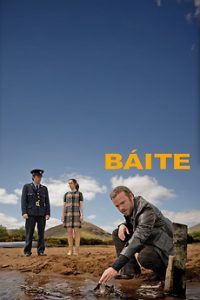
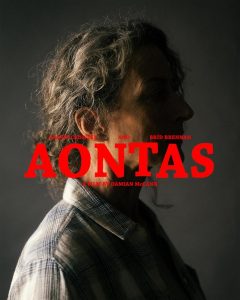
Reflecting on John Farrelly’s An Taibhse and Aislinn Clarke’s Fréwaka, Simon Hewitt traces interesting generic similarities in the two stories, contemporaneously produced and released, and interweaves these with their Gaelic dialogue and locations. As Hewitt explains how the films have been tonally, thematically and narratively informed by the folk horror subgenre, he suggests – against what might be initially counterintuitive feelings about this “fit” – how readily the Irish landscape, characterisations and moments of historical experience find eloquent expression in a type of film more commonly associated with the British horror tradition (both cinematically and in literature). Hewitt’s closing lines point to the tip of an Irish Gothic iceberg, reminding us of a rich and voluminous indigenous literary canon and a cultural tradition (whether printed, oral or sung) that may justify the writer-directors’ propensity to explore the darker stories of our national folk subcultures. In her review of Ruán Magan’s début feature Báite – the third Irish-language production considered this year – Ciara Barrett astutely unpacks the film’s somewhat problematic interweaving of local and global qualities in a work that purports to be manifestly (on the surface) “Irish”. Although, perhaps, an intriguing endeavour, the narrative is neither as uncontaminated by mainstream cinematic devices nor as indifferent to stereotypical overseas perspectives of Ireland as might first appear. The mise en scène is inhabited by “authentic” local characters, set in a “traditional” rural context, speaking the national language, and obliquely referencing “genuinely” identifiable themes and historical details. However, this framing is cautiously handled so that there are enough established, recognisable cultural points of contact for the non-native spectator. Barrett parses the intricacies and construction of these elements to propose that, in many respects, the film does not effect as much of a break with long-established representations of the country, as might be desirable in a work so imbued with indigenous qualities. Sasha Wood offers a perceptive review of Damian McCann’s Irish language film Aontas and celebrates a definite maturation of cinema in the indigenous tongue. An important quality identified by Wood is the film’s competent and nuanced engagement with global elements; whether thematically in its concerns about cultural consequences of international neoliberal economic dominance, or cinematically in its adept adaptation of formal narrative characteristics of the ubiquitous “puzzle film”. Wood is struck by the apparent ease with which McCann integrates patently global attributes with authentically local and national concerns, characters and circumstances. In fact, Wood wisely suggests that through McCann’s subtle and intelligent sleight of hand, this integration is constructed so that thematic concerns of the film and the personal belief-systems of the characters come to problematise the global hegemonic forces that insidiously threaten and compromise individual and national selfhoods, cultural histories and values.
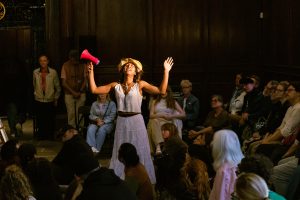
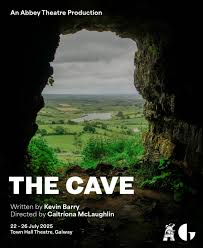
Kate Antosik-Parsons considers the live performance Terrapolis which was part of Staying with the Trouble, an exhibition last summer at the Irish Museum of Modern Art. Referencing the effervescent merging of formal performative qualities – from costume design, to audio-visual registers, to vocal and choreographed movements – with the thematic concerns of the piece, Antosik-Parsons explains how the event successfully and intriguingly mobilised modes of dramatic fluidity to display and celebrate various fluidities of identity. Combining historical narratives with contemporary experiences, peripheral with “normative” modes of self-expression and selfhood, and on-the-nose emotional sincerity with tongue-in-cheek irony, Terrapolis unfolded as an innovative intertextual tapestry that engaged its audience viscerally, intellectually and emotionally, all the while acknowledging the incongruity of its avant garde theatricality set within the historically important arena of Dublin’s former Royal Kilmainham Hospital. Stephanie McBride offers a reflection on the Abbey Theatre production The Cave by director Caitríona McLaughlin and writer Kevin Barry. The Beckettesque tragicomedy tells the tale of two brothers, living in a remote part of County Sligo, who connect only vicariously with the contemporary world through online content that they receive on their mobile phones. The precarity of their relationship with reality is explored by McLaughlin and Barry’s gradual release of information about the very real and traumatic experiences of their youth and the volatility of the internet signal, which constantly disrupts their connectivity. The work is not simply a straightforward (and often seen) playing with juxtapositions of tradition (of the remote rural Ireland) with the trappings of modernity (corrupting technologies of the modern age). As McBride insightfully sets out: the innovation here is that the play confronts the implications for social and communal relationships of the hyper-mediated reality that ubiquitously haunts us, existentially and psychologically. The rocky Sligo cave inhabited by the reclusive brothers is more than a place of alienation and marginalisation: more terrifyingly, it is symbolic of the condition in which twenty-first century global citizens are voluntarily, virtually incarcerated by IT corporations and their owners.
In his contribution, Graham Price reviews the restaging of Reunion by writer-director Mark O’Rowe, which had a revival at the Gaiety Theatre in October. As in The Cave, O’Rowe’s mise en scène is a remote western Irish location and, also reminiscent of Kevin Barry’s play, it depicts the complexities of familial relationships rooted in historical residues of tormented experiences. Price situates the play within a tradition of Irish Revival theatre, especially invoking John Millington Synge’s piece Riders to the Sea, but astutely observes tonal and structural qualities that show indebtedness to the work of the Norwegian playwright Ibsen and Samuel Beckett. He argues that an overtly (and overly) complex exposition, during which audiences are forced to navigate a complicated presentation of characters and their interrelationships, is likely a deliberate ruse by O’Rawe to dramatise the intricacy of the historical baggage borne by the individuals, and the mal-à-l’aise engendered in them, that they are forced to confront. This legacy is one that Price also traces from the great Irish authors who have dealt with the theme of the weight of Ireland’s supressed histories – national and personal – on its citizens. The theme of historical haunting also informs the autobiographical feature début, A Want in Her, by Myrid Carten. Ellen Scally offers insights into how the narrative of Carten’s reflections – on her family’s affliction with alcoholism, and her personal negotiation of its impact on her own experiences – is delicately but complexly represented through the film’s formal elements. Scally incisively focuses on the camerawork and its strategic role in subtly creating an environment of instability and uncertainty that correlates with the emotional condition of the protagonist. She finds echoes of the found-footage horror permeating the visual construction of Carten’s film and explores several cinematic (and cinematographic) techniques used by the director to engage and at times unsettle her viewers. Scally convincingly proposes that there is no “easy out” here offered by the filmmaker: sufferances of the past, of the historical burdens that continue to haunt us, of those brought to us by earlier generations must be managed, contained, observed and navigated in the renewal of each individual’s self-determinism and well-being.
To conclude this section, Denis Condon uses the titular numerical coincidence in the films Four Letters of Love (Polly Steele) and Four Mothers (Darren Thornton) to take a peripatetic stroll between themes common to both narratives. While the stories share identifiable generic qualities and fit easily into shorthand categories with standard plot pieces, neither leans overtly into a rigid cinematic form or style. Nor does either film probe recognisable, traditionally recurring Irish topics in any dogmatic way: we are privy to intimate disclosures about the domineering patriarchal control over families and family structures, homosexual relationships, heteronormative and conventional marriages, belief in supernatural experiences and vocations, and associations between artistic liberation and personal expression. However, none of these is prescriptively or didactically approached, or used as a point of ideological proselytising. Condon could be implicitly suggesting that the films represent a certain moment of maturation of indigenous cinematic, whereby their depth is mined by strong characterisation and powerful stories, without recourse to the older themes and representations that have haunted negotiations of the Irish identity on screen.
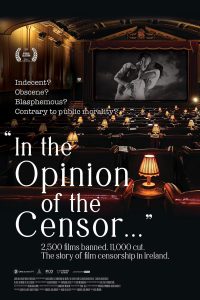
“What we did with our freedom when we won it”: Review of In the Opinion of the Censor
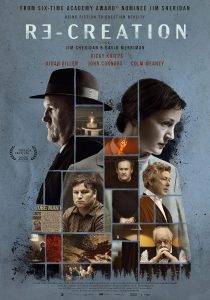
Re-Creation
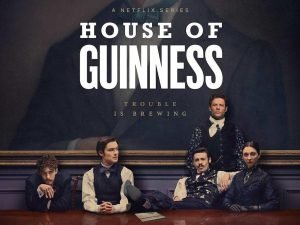
House of Guinness – The Importance of Representation and the Question of Accuracy
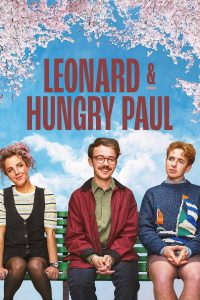
Leonard and Hungry Paul
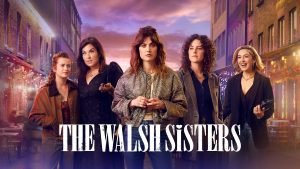
The Walsh Sisters – Doing it for themselves
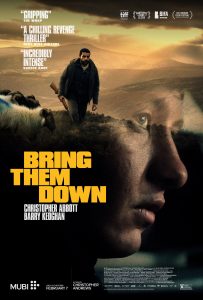
Bring Them Down – New Rural Spatialisations of Irish Criminality
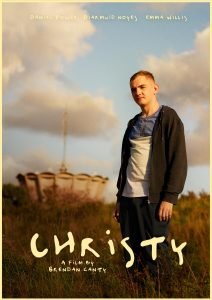
Christy – The Politics of Spatial Injustice on Screen
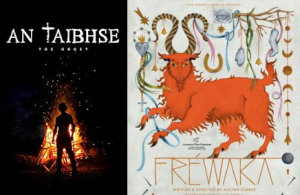
Every Evil Has its Roots – Comparative Review of An Taibhse and Fréwaka
Báite
Aontas – Empathy, Relationality, and the Irish-Language Puzzle Film
Terrapolis: Staying with the Trouble – Becoming with Each Other
The Cave
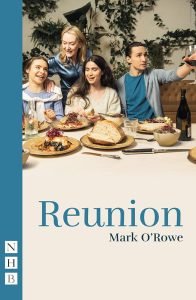
Reunion
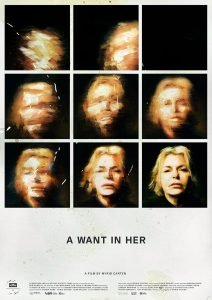
A Want in Her
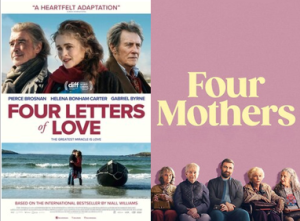
Four Mothers of Love: Reflections on Four Letters of Love and Four Mothers


